
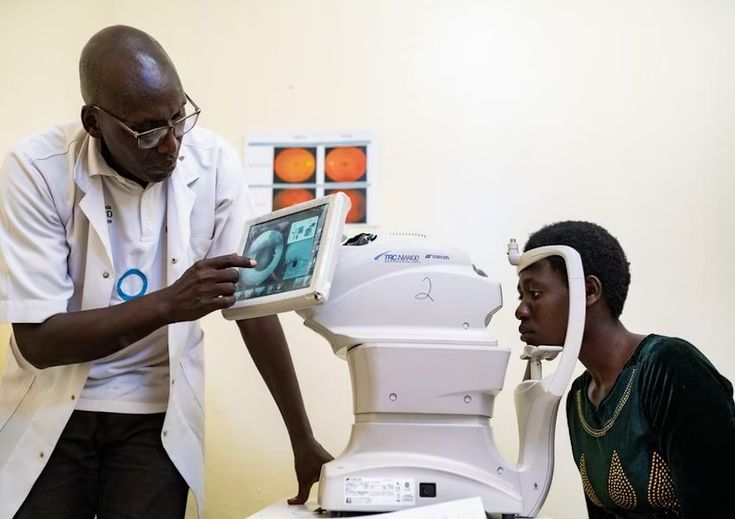
Harnessing Artificial Intelligence to Strengthen Healthcare Systems in Emerging Markets
For decades, health reform in emerging markets has followed a familiar script: build more hospitals, train more workers, attract more aid. Yet even as budgets expand and infrastructure improves, the fundamental challenge remains unchanged: too few resources stretched across too many needs. Artificial intelligence offers a chance to change not just the tools but the terms of engagement. It doesn’t replace human care; it reallocates it, automating routine tasks so clinicians can focus on what only they can do.
In high-income countries, AI is often considered a futuristic upgrade, useful and intriguing but largely supplemental. In lower-income settings, it is starting to look more like essential infrastructure. The urgency is sharper, the constraints more severe, and the room for inefficiency virtually nonexistent. Here, the value of AI lies not in novelty but in necessity.
This year’s World Health Day, marked under the theme “My health, my right”, spotlighted global health inequalities. Nowhere are these disparities more acute than in sub-Saharan Africa, where doctors are scarce, diagnostics are delayed, and health systems groan under the weight of demand. With the right governance, investment, and intent, AI could help narrow the gap, not by magic, but by doing more with less, faster.
From Prototype to Patient Impact
In Nigeria, artificial intelligence is no longer trapped in innovation labs or academic pilot zones. It is beginning to integrate into the care architecture across clinics, hospitals, and the digital services in between. In Lagos, platforms like WellaHealth and Healthtracka are deploying machine learning to streamline diagnostics and patient routing. Healthtracka’s AI-assisted home testing service, for example, connects users to labs and telemedicine consultations based on real-time data inputs, easing the load on public facilities and improving diagnostic turnaround times.
In diagnostic imaging, AI tools trained on region-specific datasets are being applied to detect tuberculosis, pneumonia, and other respiratory conditions with impressive accuracy. The AI4Health initiative, led by the University of Lagos and its regional partners, is developing scalable models tailored to African patient populations. In countries where radiologists are counted in dozens rather than thousands, such tools offer more than innovation; they deliver clinical capacity where none existed.
Elsewhere on the continent, governments are starting to leverage AI to solve logistical bottlenecks. Rwanda is testing predictive analytics to monitor drug supply chains and reduce stockouts. In Ethiopia, satellite-driven machine learning models are being used to anticipate malaria outbreaks weeks in advance, giving public health teams a head start on vector control. These are the kinds of applications where the technology’s precision aligns neatly with public health urgency and fiscal constraint.
At Havilah Strategies, we’re particularly focused on how AI can optimise health workforce deployment. Imagine predictive dashboards that alert decision-makers to emerging hotspots in maternal complications, enabling faster redeployment of midwives. Or algorithms that identify routine vaccine gaps in remote areas before they turn into full-scale coverage failures. These solutions are not speculative; they’re technically feasible today. The question is whether policy and systems can move quickly enough to match the opportunity.
The Hype Is Real, But So Are the Hurdles
For all its promise, AI is no panacea. It will not fix broken health systems on its own. Algorithms can optimise decisions, but they do not generate electricity, train clinicians, or build trust. The deeper challenge lies not in the technology but in the institutional and infrastructural ecosystem that must support it.
Data is the starting point and the stumbling block. Across much of sub-Saharan Africa, health records remain fragmented, paper-based, or locked within under-resourced HMIS platforms. Even where digital data exists, it is often siloed within private firms or donor programmes, with little interoperability or national control. Without clean, structured, and context-specific datasets, AI models become brittle: underfed at best and misinformed at worst.
Governance is equally underdeveloped. Few countries in the region have established frameworks for algorithmic accountability, clinical validation, or ethical safeguards. Who certifies these systems? What recourse exists when an AI tool misdiagnoses or models trained on incomplete data reinforce exclusion? In Nigeria, where AI experimentation is accelerating, national policy on digital health governance remains notably absent.
Technical infrastructure also lags behind. AI systems depend on cloud computing, real-time connectivity, and stable electricity, features still aspirational in many rural areas. But digital infrastructure alone is not enough. Effective deployment also demands local expertise: not just developers but epidemiologists, clinicians, and public health regulators who understand the intersections between health systems and machine learning.
And yet, these are solvable problems. Several African countries are already showing how to blend ambition with accountability. Kenya’s 2023 National AI Strategy offers a blueprint for ethical and inclusive adoption, with clear provisions for health data governance and public-private collaboration. Rwanda has gone further, embedding AI into its national digital health roadmap. Nigeria does not need to reinvent the wheel. But it does need to act with urgency, coordination, and a clear-eyed view of what’s at stake.
Our Strategic Outlook
At Havilah Strategies, we do not believe that artificial intelligence will transform African healthcare through scattered pilots or donor-funded apps. The real impact will come when AI is embedded into the operating system of public health, treated not as a novelty but as infrastructure.
To make that possible, four priorities must guide action. First, governments should establish robust national frameworks for AI in health grounded in ethics, transparency, and data sovereignty. That includes independent audit bodies, algorithmic certification protocols, and clear legal recourse when systems fail. Second, inclusive data must become a national asset. Without representative, high-quality datasets, AI will replicate existing blind spots. Governments can help unlock value by incentivising data-sharing across public and private actors, investing in data infrastructure, and supporting federated learning approaches that preserve privacy while enabling reach.
Third, AI investments must target what we call “high-friction gaps”, the failure points that weaken service delivery every day: triage, diagnostics, forecasting, and workforce planning. These are not speculative frontiers. They are solvable choke points where machine learning can deliver immediate gains. Fourth, AI literacy must be built into the foundations of health governance, not just for coders but also for clinicians, programme managers, civil servants, and regulators. If public actors cannot evaluate or interrogate these tools, they cannot govern them.
None of this will happen by accident. But the alternative, passive adoption, fragmented experiments, and unregulated tools are already taking shape. The question is not whether AI will enter healthcare systems. It’s whether those systems will be ready to guide, scale, and own it. Ultimately, the future of healthcare in emerging markets may hinge less on doing more with less and more on doing smarter with what’s already available.
References
- Daily Trust. (2024). Nigeria’s Healthtracka selected for Google’s AI for health programme. Retrieved from https://dailytrust.com/nigerias-healthtracka-selected-for-googles-ai-for-health-programme/Daily Trust+1TechCrunch+1
- Academic Medical Education. (2024). Artificial Intelligence in Infectious Disease Workshop 2024. Retrieved from https://academicmedicaleducation.com/meeting/artificial-intelligence-infectious-disease-workshop-2024Academic Medical Education
- Ministry of Information, Communications and the Digital Economy, Kenya. (2025). Kenya Artificial Intelligence Strategy 2025-2030. Retrieved from https://ict.go.ke/sites/default/files/2025-03/Kenya%20AI%20Strategy%202025%20-%202030.pdfICT Authority+1ICT Authority+1
- Government of Rwanda. (2018). National Strategy – Rwanda eHealth strategic plan 2018-2023. Retrieved from https://extranet.who.int/countryplanningcycles/sites/default/files/public_file_rep/RWA_Rwanda_Digital-Health-Strategy_2018-2023.PdfWHO Extranet
- Grand Challenges Ethiopia. (2024). AI-Based Malaria Incidence Prediction Under Current and Future Climate in Southern Ethiopia (AIM-Clim). Retrieved from https://gcgh.grandchallenges.org/grant/ai-based-malaria-incidence-prediction-under-current-and-future-climate-southern-ethiopia-aimGrand Challenges
- (2022). Pharmacy Benefits Management In Nigeria: Africa Pill’s Pack. Retrieved from https://www.wellahealth.com/blog/pharmacy-benefits-management-in-nigeria-africa-pills-pack/wellahealth.com+1wellahealth.com+1
- Delft Imaging. (2023). Advancing TB detection in Nigeria: AI-enabled solutions at the forefront. Retrieved from https://delft.care/advancing-tb-detection-in-nigeria-ai-enabled-solutions-at-the-forefront/Delft Imaging
- Smart Africa. (2025). Smart Africa Steering Committee convenes in Kigali, and endorses the establishment of the Africa Artificial Intelligence Council. Retrieved from https://smartafrica.org/smart-africa-steering-committee-convenes-in-kigali-and-endorses-the-establishment-of-the-africa-artificial-intelligence-council/Smart Africa
- (2021). Satellite Observations and Malaria: New Opportunities for Research and Applications. Retrieved from https://www.sciencedirect.com/science/article/pii/S1471492221000556ScienceDirect
- (n.d.). Healthtracka – LinkedIn Nigeria. Retrieved from https://ng.linkedin.com/company/healthtrackaTechCrunch+2LinkedIn+2Daily Trust+2
- com. (2023). AI helps improve TB screening in Nigeria. Retrieved from https://www.auntminnie.com/imaging-informatics/artificial-intelligence/article/15633141/ai-helps-improve-tb-screening-in-nigeriaAuntMinnie
- Global Policy Watch. (2025). Kenya’s AI Strategy 2025–2030: Signals for Global Companies Operating in Africa. Retrieved from https://www.globalpolicywatch.com/2025/04/kenyas-ai-strategy-2025-2030-signals-for-global-companies-operating-in-africa/Global Policy Watch
- Ministry of Health, Rwanda. (2025). New Health Intelligence Center to drive real-time, evidence-based decisions. Retrieved from https://www.moh.gov.rw/news-detail/new-health-intelligence-center-to-drive-real-time-evidence-based-decisionsMinistry of Health Rwanda
- (2025). Spatio-temporal modelling and prediction of malaria incidence in Ethiopia using machine learning models. Retrieved from https://www.nature.com/articles/s41598-025-97072-6Nature
- (2025). Nigerian Health-Tech Startup WellaHealth Hits N1.4B Milestone in Pharmacy Benefits Distribution. Retrieved from https://techcabal.com/2025/02/13/nigerian-health-tech-startup-wellahealth-hits-n1-4b-milestone-in-pharmacy-benefits-distribution/TechCabal
- (2023). Comparing tuberculosis symptom screening to chest X-ray with artificial intelligence in an active case finding campaign in Northeast Nigeria. Retrieved from https://pubmed.ncbi.nlm.nih.gov/39681894/PubMed+1Academic Medical Education+1
- (2025). Kenya: Unveiling of the National AI Strategy 2025-2030 – A Bold Step into the Future. Retrieved from https://bowmanslaw.com/insights/kenya-unveiling-of-the-national-ai-strategy-2025-2030-a-bold-step-into-the-future/Bowman Law
- World Economic Forum. (2025). How Rwanda is using AI to transform healthcare. Retrieved from https://www.weforum.org/videos/c4ir-rwanda/World Economic Forum
- (2024). Predicting malaria prevalence with machine learning models using satellite-based climate information. Retrieved from https://www.researchgate.net/publication/378298118_Predicting_malaria_prevalence_with_machine_learning_models_using_satellite-based_climate_informationResearchGate+1ResearchGate+1
- Swiss Re Foundation. (2021). WellaHealth: Affordable health coverage throughout Nigeria. Retrieved from https://www.swissre.com/foundation/e4ra-21-wellahealth.htmlSwiss Re Group | Swiss Re
- (2025). Shaping Kenya’s AI Future: UNESCO Contributes to National AI Strategy Formulation. Retrieved from https://www.unesco.org/en/articles/shaping-kenyas-ai-future-unesco-contributes-national-ai-strategy-formulationUNESCO
- (2024). Policy Blueprint. Retrieved from https://www.villagereach.org/wp-content/uploads/2024/08/VR-Blueprint-Report.pdfvillagereach.org
PubMed. (2012). Remote sensing-based time series models for malaria early warning in the highlands of Ethiopia. Retrieved from https://pubmed.ncbi.nlm.nih.gov/22583705/





Leave a Reply
Want to join the discussion?Feel free to contribute!